case study · designer & engineer, solo · 2026 — present
Pyxis.Know what's in your .env files.

Personal project · macOS
Ask me about it ↗Pyxis is a local-first inventory and vault for the environment variables already scattered across a developer's disk. macOS, CLI first, with a menubar app. No accounts, no server, no network — ever.
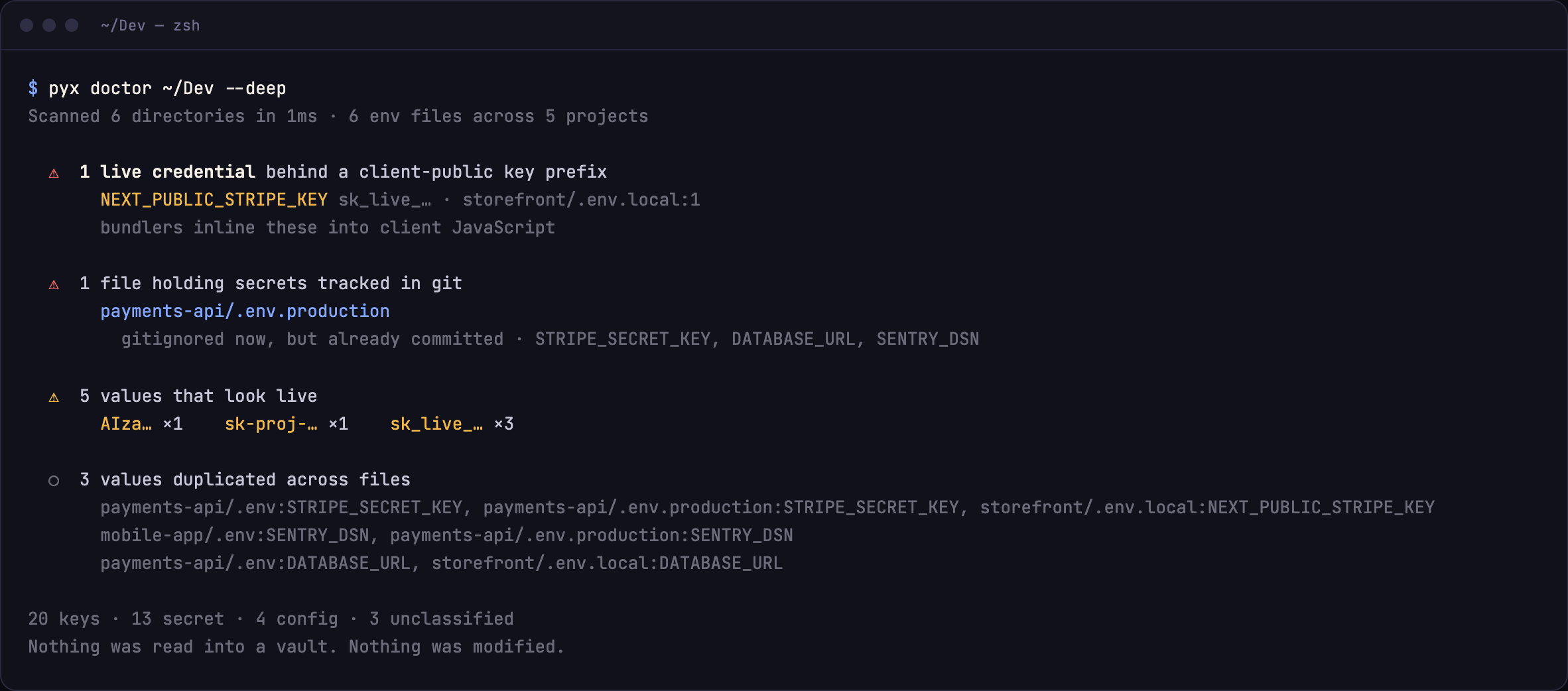
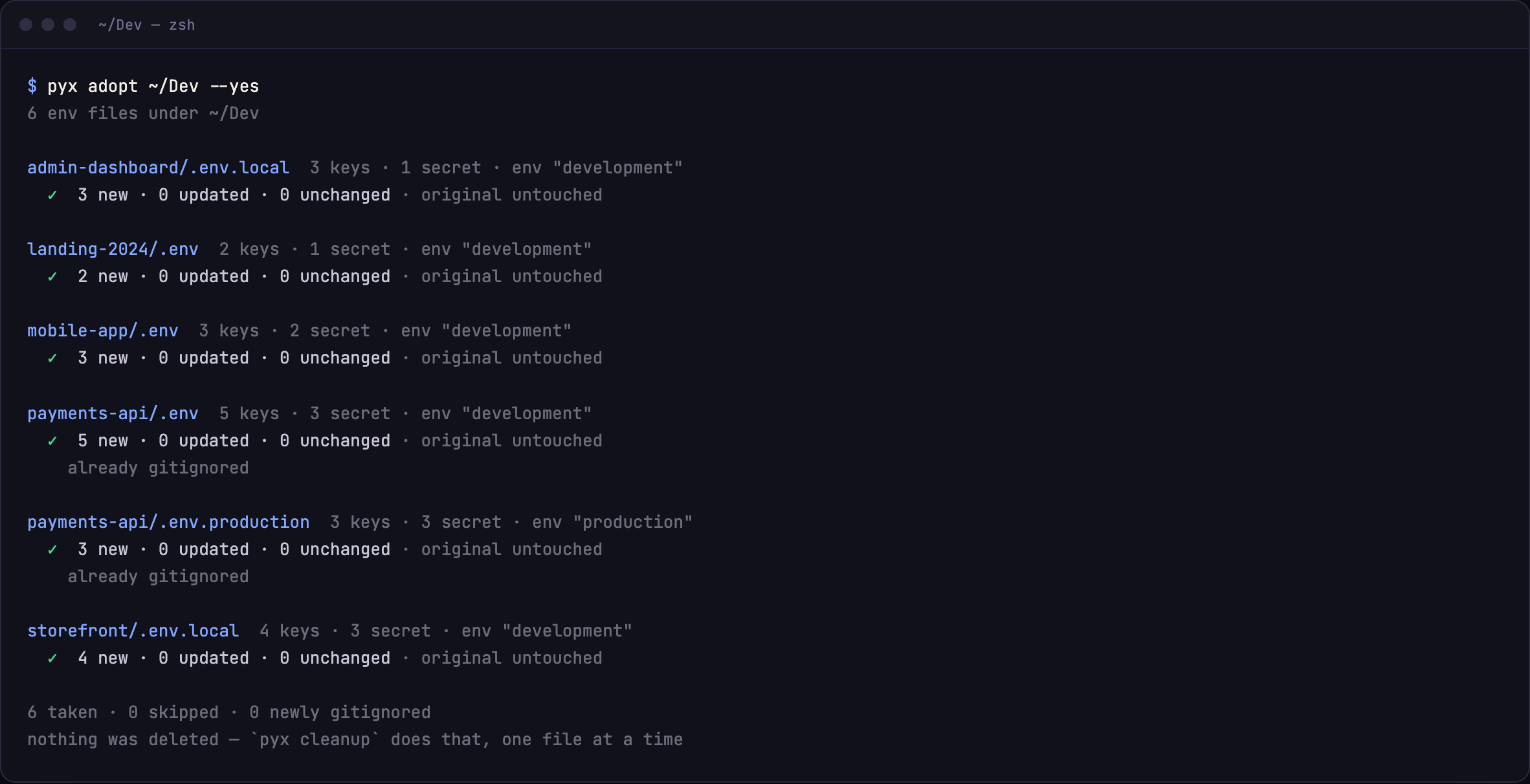
It started from a question nothing answers: what do I already have? The same Stripe key in three projects, a .env.production committed months ago, a live secret behind a NEXT_PUBLIC_ prefix that a bundler will happily ship to every browser. pyx doctor answers that read-only, with no vault and no passphrase, and adopt takes the files in byte for byte without touching the originals.
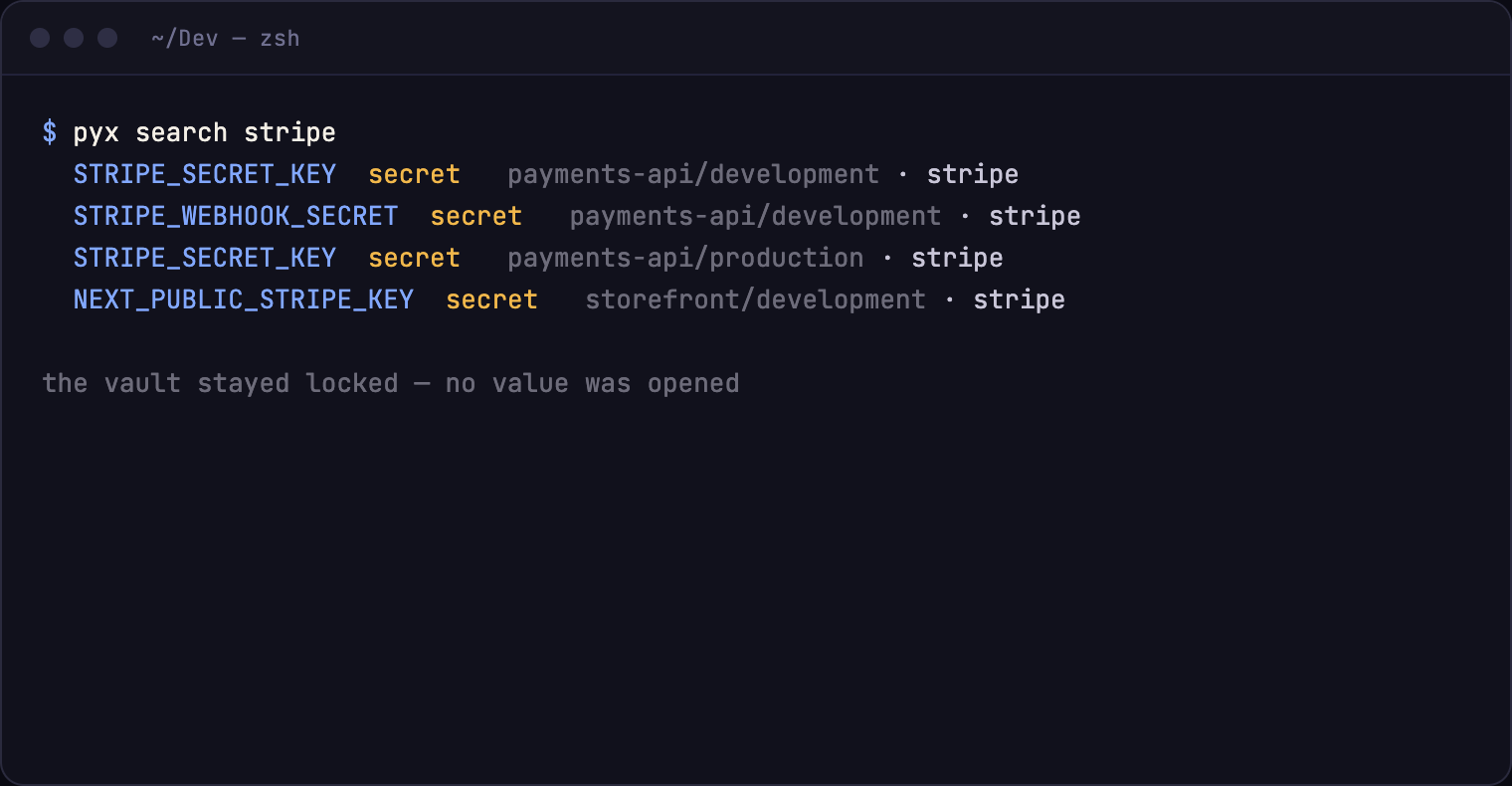
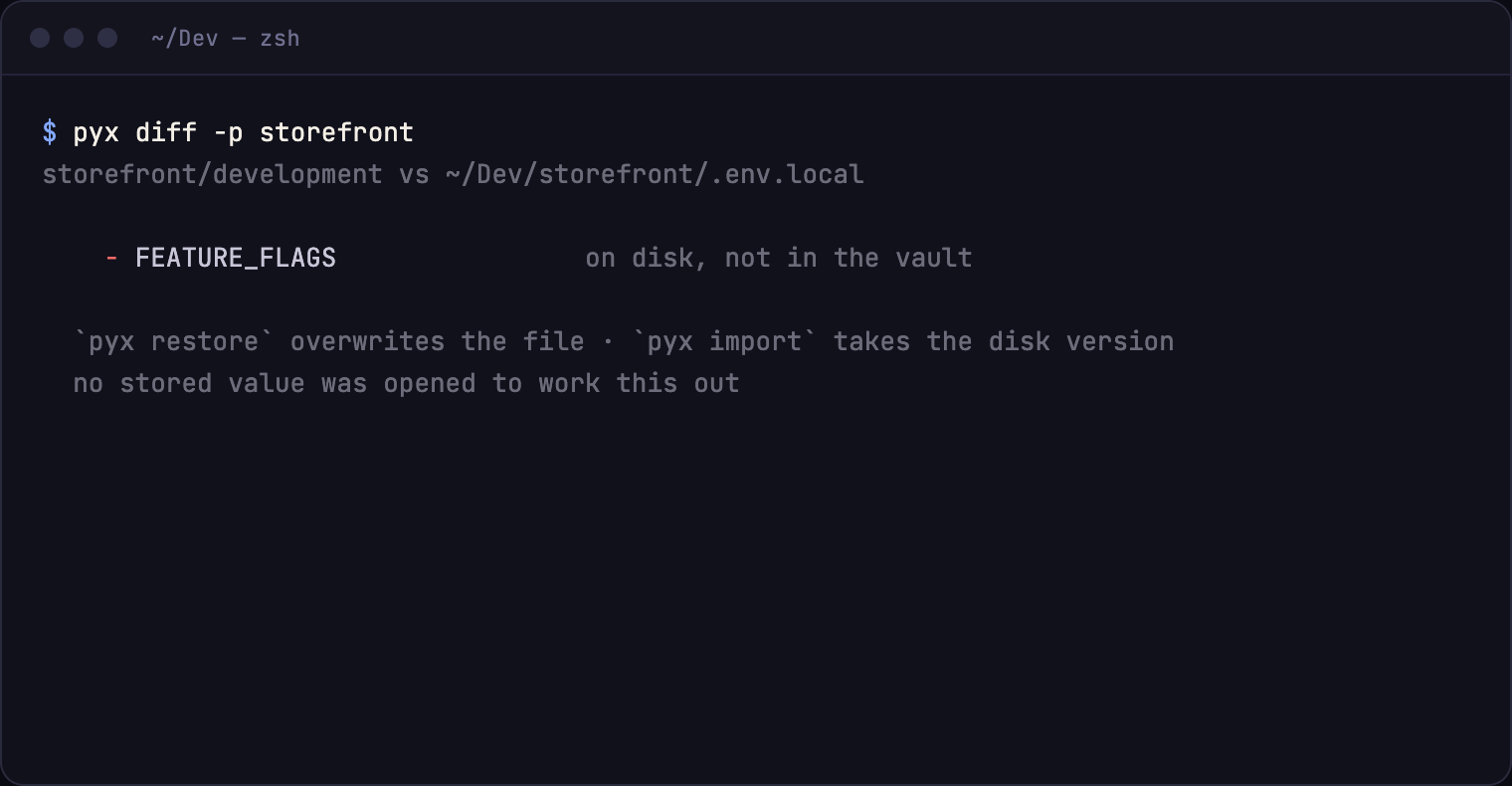
Once it holds something, pyx run injects an environment into a process without anything touching disk, and the inventory commands — search, which, dupes, stale, orphans — work with the vault locked, because only the values are sealed.
stack
- Rust
- Tauri
- SQLite
- Argon2id
- XChaCha20-Poly1305
- HKDF
- HMAC-SHA256
- macOS Security
- clap
- cargo-fuzz
An inventory, not just a vault
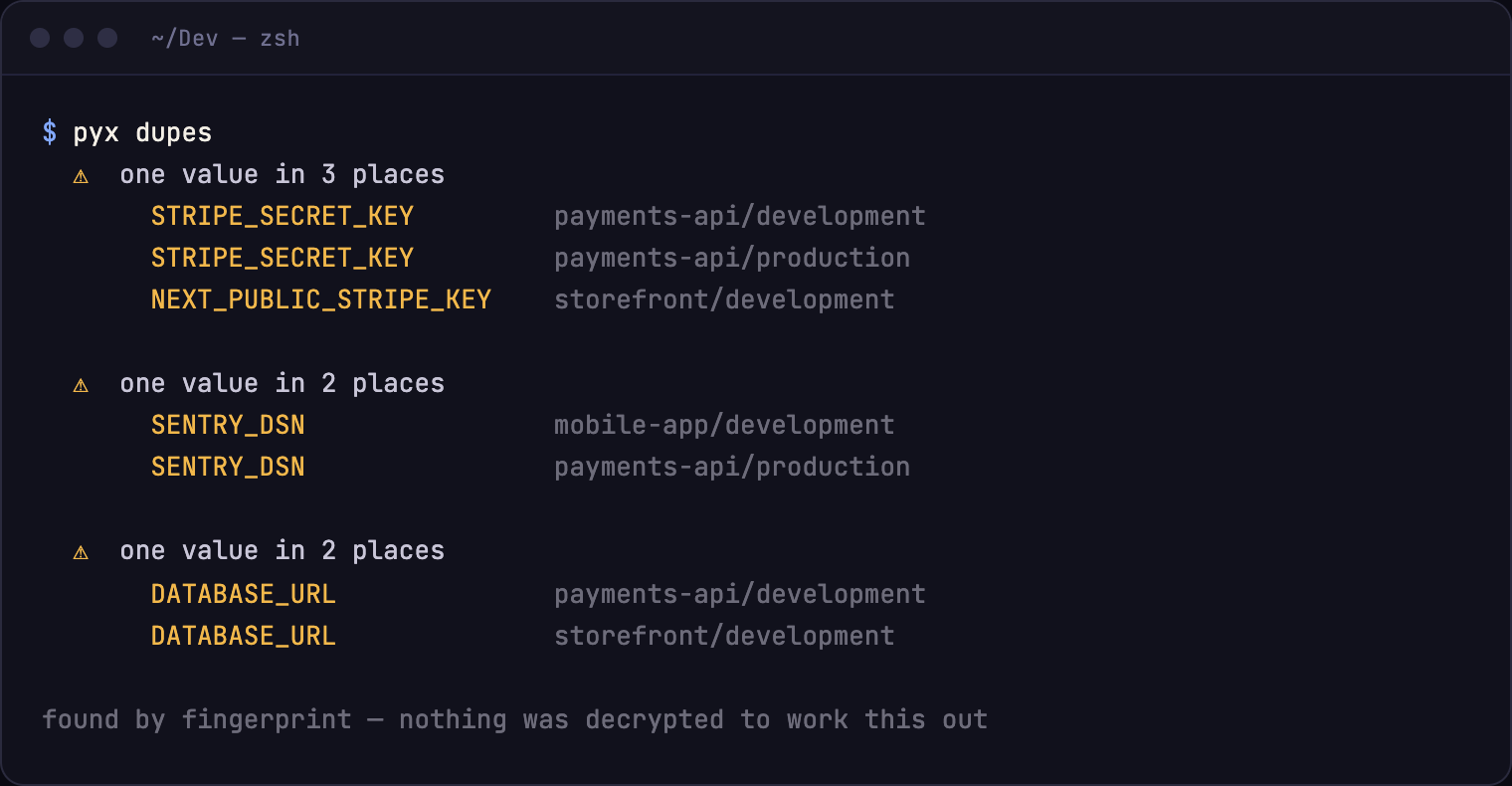
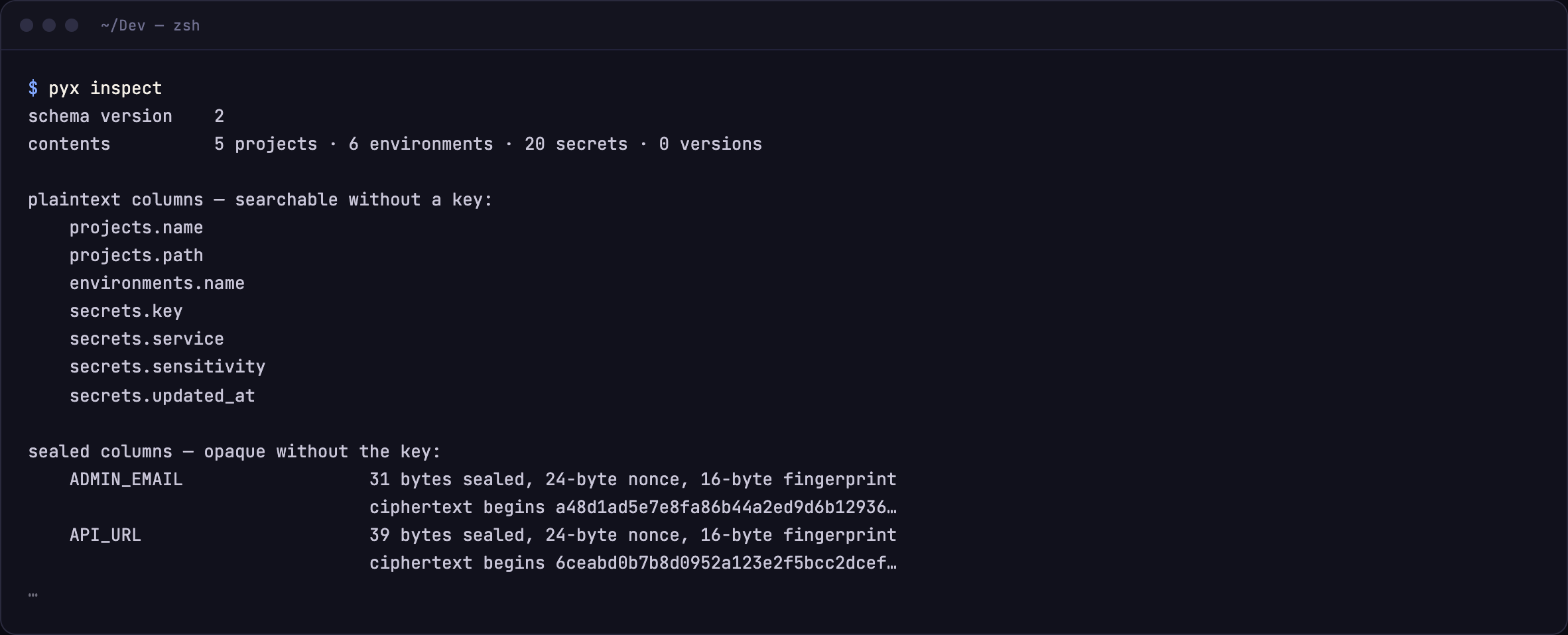
Key names, projects and services are plaintext and searchable; values are sealed. Duplicates are found by keyed HMAC fingerprint, so pyx dupes matches equal secrets across projects without decrypting a single one.
Standard crypto, one module
Argon2id wraps a random 32-byte data key; HKDF separates the value, fingerprint and audit keys; XChaCha20-Poly1305 seals each value bound to its vault, environment and row, so a blob moved between rows fails to open.
No network, provably
No HTTP client anywhere in the dependency graph, enforced in CI, and #![forbid(unsafe_code)] across the workspace. A separate agent holds the key and checks its callers' code signatures. 174 tests, plus fuzzing.
the work
Want the full story?